
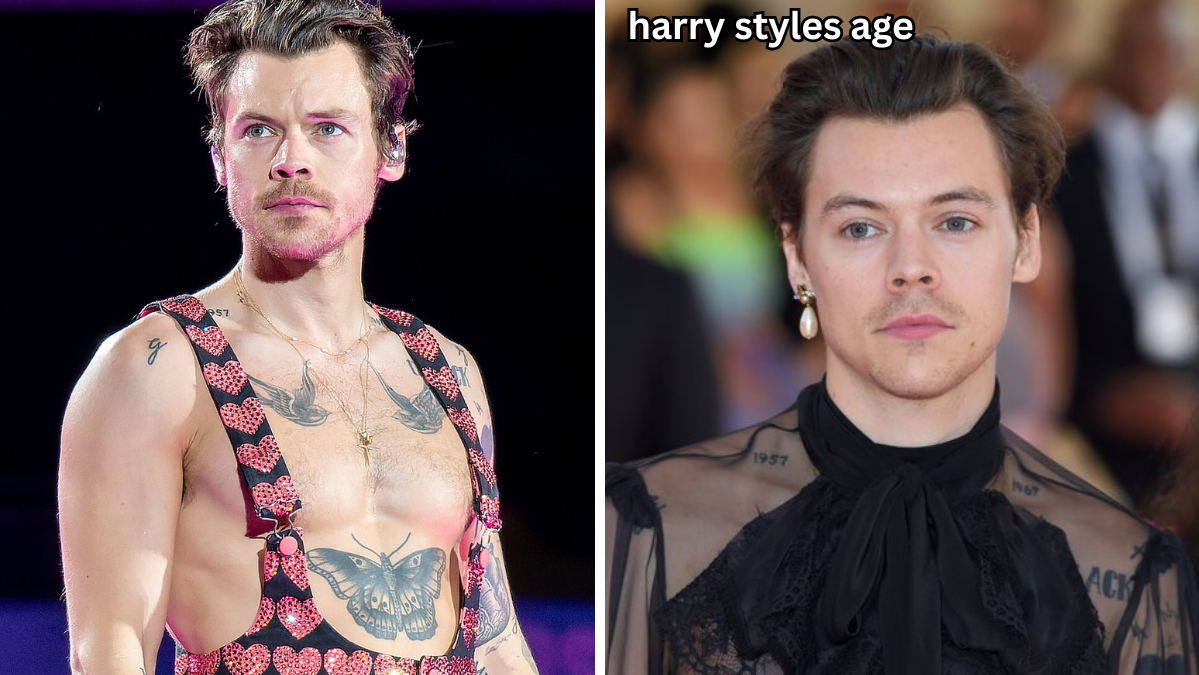
Harry Styles was born on February 1, 1994, which makes him 32 years old as of June 2026. The English singer, songwriter, actor, and fashion figure has spent more than half of his life in the public eye, beginning as a teenager on The X Factor and growing into one of the most recognizable entertainers of his generation. His career has moved through several distinct phases: boy-band fame with One Direction, a successful solo music career, acting roles in major films, and an expanding influence on modern fashion and pop culture.
What makes his story especially interesting is that his public image has never stayed frozen in one era. Fans first knew him as the curly-haired teenager with a playful personality in One Direction. Later, he became a rock-influenced solo artist, a stadium performer, a Grammy-winning musician, and a style icon known for treating clothes as part of his creative expression. Looking at his life through the lens of age helps explain how much he has achieved in a relatively short period.
The Essential Facts About Harry Styles
Harry Edward Styles was born in Worcestershire, England, and spent much of his childhood in Holmes Chapel, Cheshire. His birthday falls on February 1, meaning he is an Aquarius according to the Western zodiac calendar. While astrology is not the reason for his success, some fans enjoy connecting his adventurous public personality, creativity, and independent streak with the traits often associated with Aquarius.
His early life was far more ordinary than the global career that followed. Before international fame, he attended Holmes Chapel Comprehensive School and worked part-time in a bakery. That detail has become part of his public origin story because it shows how quickly life changed after he auditioned for The X Factor in 2010. In only a few years, he went from a local teenager with musical ambition to a member of one of the best-selling boy bands in modern pop history.
| Detail | Information | Why It Matters |
|---|---|---|
| Full name | Harry Edward Styles | His professional name remains the same as his birth name |
| Date of birth | February 1, 1994 | Establishes his current age and annual birthday |
| Birthplace | Worcestershire, England | Connects him to his English upbringing and early life |
| Raised in | Holmes Chapel, Cheshire | The town closely linked to his childhood memories |
| Career beginning | 2010 | The year he auditioned for The X Factor |
| Breakthrough group | One Direction | The group that made him internationally famous |
| Solo debut album | Harry Styles | Released in 2017 and introduced his solo identity |
| Grammy-winning album | Harry’s House | Won Album of the Year at the 2023 Grammy Awards |
The details may appear simple, but they help put his rise into perspective. He entered the entertainment industry while still in his teens, learned the pressures of global fame early, and continued developing as an artist in public. Many performers take decades to move from being known as a group member to being respected for individual work. Styles made that transition while maintaining a large international audience.
Why Harry Styles Age Draws So Much Attention
Search interest around the Harry Styles age keyword is not only about finding a number. It reflects curiosity about how long he has been famous, how young he was when One Direction began, and how he has changed from a teenage television contestant into an established adult artist. People often remember him from the early 2010s, so it can feel surprising to realize that the young singer from the band’s first auditions is now in his thirties.
His career also creates an unusual sense of time because major milestones arrived quickly. He joined One Direction at 16, toured the world before his twenties were over, released his first solo album at 23, won major awards in his late twenties, and entered a new musical chapter in his early thirties. Instead of having one defining peak, he has built several different eras, each with its own sound, visuals, audience, and cultural conversation.
Public fascination with celebrity age often has more to do with memory than numbers. People connect certain songs to school years, friendships, relationships, road trips, and major life changes. When a familiar artist reaches a new age, listeners naturally think about their own timeline as well. Styles has been part of pop culture for long enough that different age groups remember him differently: some discovered him through One Direction, others through “Sign of the Times,” “Watermelon Sugar,” “As It Was,” or his film work.
There is also a practical reason people search for this information. His birthday is frequently celebrated online by fans around the world, and February 1 often brings tributes, streaming campaigns, fan projects, retrospective posts, and discussions about his career. Unlike a passing celebrity fact, his age becomes a starting point for a larger story about growth, longevity, and the unusual path from talent-show contestant to global star.
Childhood, Family, and the Years Before Fame
Styles grew up in England with his mother, Anne Twist, and his older sister, Gemma Styles. His parents separated when he was young, and his childhood experiences shaped the close family bond that fans have often seen reflected in public appearances and interviews. Although he later became associated with glamorous fashion shows, sold-out arenas, and major award ceremonies, his early background was rooted in a normal small-town environment.
Music became important to him before fame arrived. Like many young performers, he was influenced by classic rock, pop, folk, and singer-songwriter traditions. His later solo work would show traces of artists from several eras, with guitar-driven sounds, warm vocal production, reflective lyrics, and a willingness to move beyond standard radio-pop formulas. Even when his songs are designed for large audiences, they often carry a personal, homegrown feeling.
Before auditioning for The X Factor, he performed with a school band called White Eskimo. The group gave him a chance to sing in front of people, work with other musicians, and build confidence as a performer. Those early experiences were modest compared with the massive venues he would eventually headline, but they mattered. They helped turn a general interest in music into a real ambition.
His journey also shows that early success is rarely as effortless as it appears from the outside. Entering a televised competition at a young age meant being judged, filmed, and discussed by millions of viewers before he had fully grown into adulthood. The speed of that transition was intense, but it gave him practical experience in performance, media attention, touring, studio recording, and fan engagement long before most artists reach that level of exposure.
The One Direction Years and a Fast Rise to Global Fame
In 2010, Styles auditioned for the British version of The X Factor. He did not continue as a solo competitor, but the show’s judges brought him together with Niall Horan, Liam Payne, Louis Tomlinson, and Zayn Malik to form One Direction. The decision changed all five lives. What began as a television-created group became a worldwide music phenomenon with devoted fans across Europe, North America, Latin America, Asia, the Middle East, and beyond.
One Direction built its success through memorable pop songs, constant touring, energetic interviews, and a strong connection with fans. Their albums included Up All Night, Take Me Home, Midnight Memories, Four, and Made in the A.M. The group’s appeal was not limited to one hit single or one market. Their popularity came from a combination of catchy music, individual personalities, social-media visibility, and the feeling that fans were growing up alongside them.
Styles quickly became one of the group’s most recognizable members. His curls, tattoos, stage presence, humor, and distinctive voice made him a frequent subject of fan discussion. Still, One Direction worked because the members had different strengths that complemented each other. Each singer brought a different vocal style and public personality, creating a group dynamic that felt larger than any one person.
The band’s schedule was demanding. They released music rapidly, traveled constantly, performed in stadiums, appeared on television, and faced intense public attention. For someone who entered the group at 16, the experience was a major education in the realities of the music business. By the time the group went on an indefinite hiatus in 2016, Styles had already spent years performing for huge crowds and working in a global entertainment machine.
The One Direction era remains important because it gave him a foundation, but it does not fully define him. Many former boy-band members struggle to establish a separate artistic identity. Styles took a slower and more deliberate route. Instead of immediately releasing a version of the same sound, he waited, wrote, collaborated, and returned with music that clearly separated his solo work from the group’s catalog.
The Solo Debut That Redefined His Image
When Styles released his self-titled debut album in 2017, the goal was not simply to prove that he could continue without a group. The album introduced a different musical personality. Its sound leaned into classic rock, soft rock, folk-pop, and cinematic balladry. The lead single, “Sign of the Times,” arrived with a dramatic vocal performance and a sense of scale that surprised listeners who expected straightforward boy-band pop.
The song became an important statement of intent. Rather than chasing the safest possible radio trend, Styles released something emotional, expansive, and musically ambitious. The video reinforced that feeling by showing him flying above dramatic landscapes, creating an image that was more theatrical and surreal than typical pop promotion. It suggested that his solo era would be built around mood, symbolism, and artistic contrast.
The album also included songs such as “Carolina,” “Kiwi,” “Sweet Creature,” and “From the Dining Table.” Together, these tracks showed different sides of his songwriting identity. “Kiwi” carried raw rock energy, “Sweet Creature” felt intimate and acoustic, while “From the Dining Table” explored loneliness with a quieter emotional tone. The variety helped establish him as more than a singer with a famous name.
His early solo performances were equally important. On stage, he developed a style that felt warm, expressive, playful, and personal. He spoke to audiences with humor, danced freely, wore colorful outfits, and treated concerts as shared experiences rather than distant celebrity appearances. Fans who had followed him from One Direction recognized familiar charisma, but the artistic setting was more mature and more individual.
The first solo album did not erase his past. Instead, it gave him room to build on it. His group years had taught him how to command a crowd, work through demanding schedules, and connect with millions of people. His solo debut showed that he could use those skills in a more personal direction. Sony Music describes the record as the beginning of his solo discography, followed by the stylistic expansion of Fine Line and Harry’s House.
Fine Line, Emotional Openness, and a Bigger Musical Identity
Released in 2019, Fine Line became the album that pushed Styles into a new level of global solo success. It was brighter, more emotionally direct, and more sonically varied than his debut. The record moved between pop, rock, funk, folk, soul, and psychedelic influences without losing its overall identity. Songs such as “Adore You,” “Lights Up,” “Falling,” “Golden,” “Cherry,” and “Watermelon Sugar” gave listeners multiple ways to enter the album.
“Watermelon Sugar” became one of his most recognizable solo hits. Its warm production, nostalgic energy, and simple chorus made it easy to sing along with, while the song’s carefree mood gave it broad appeal. It later reached the top of the Billboard Hot 100, confirming that Styles could produce a major solo chart hit without relying on his former group’s identity.
What made Fine Line especially effective was its emotional balance. The album could be joyful and colorful in one moment, then vulnerable and uncertain in the next. “Falling,” for example, became a fan favorite because of its stripped-back sadness. It showed a willingness to sound imperfect, lonely, and exposed rather than endlessly polished. That contrast helped listeners feel closer to the music.
The visual world around the album also mattered. Styles wore bold suits, sheer shirts, pearl necklaces, flared trousers, and playful color combinations. The fashion was not simply a marketing tool. It matched the album’s open-hearted and adventurous tone. His clothes became another way of expressing freedom, nostalgia, softness, confidence, and individuality.
At this point in his career, he was no longer viewed only as a former boy-band member trying a solo project. He had built a recognizable brand of music and performance. His songs could work on the radio, at festivals, in quiet rooms, and in massive arenas. That flexibility became one of his greatest strengths, allowing him to reach longtime fans while attracting listeners who had never followed One Direction.
Harry’s House, Grammy Recognition, and Global Pop Success
The release of Harry’s House in 2022 marked another major step forward. The album felt more relaxed, focused, and confident than his previous work. It blended pop hooks with soft-rock textures, retro influences, intimate songwriting, and a warm production style. Rather than trying to sound grand at every moment, the record often felt domestic, playful, and emotionally close.
Its biggest song, “As It Was,” became a worldwide success. The track’s instantly recognizable opening, fast-moving rhythm, and bittersweet lyrics made it one of the defining pop songs of its year. It topped major charts and stayed in public conversation for months. The song had an unusual combination of energy and sadness, which gave it replay value far beyond a typical seasonal hit.
The success of Harry’s House was not only commercial. The album won Album of the Year at the 2023 Grammy Awards, one of the music industry’s highest-profile honors. During his acceptance speech, Styles said, “There is no such thing as ‘best’ in music,” a comment that reflected his effort to acknowledge the subjective and collaborative nature of artistic work.
The album also strengthened his reputation as a live performer. His Love On Tour shows became known for enthusiastic crowds, colorful outfits, fan signs, emotional sing-alongs, and a playful atmosphere. Concerts often felt like community events, with people dressing in feathers, sequins, bright colors, and outfits inspired by his visual eras. The fans were not only watching a performance; they were participating in a shared celebration.
His success during this period showed the value of patience. He did not release albums every year just to remain visible. Instead, he allowed each era to develop its own sound, imagery, and touring identity. That approach helped his music feel more considered. It also made each release seem like an event rather than a routine product.
Acting, Fashion, and a Wider Cultural Presence
Music is the core of Styles’ career, but acting has become another important part of his public identity. He made his major film debut in Christopher Nolan’s 2017 war drama Dunkirk. The role was significant because it placed him in a serious ensemble film rather than a lightweight celebrity cameo. His performance attracted attention partly because audiences wanted to see whether he could move beyond music, but the film itself gave him a strong introduction to cinema.
He later appeared in Marvel’s Eternals, as well as the films Don’t Worry Darling and My Policeman. These projects showed different sides of his screen presence. Some roles were brief, while others were more central and emotionally demanding. Whether viewers focused on the films themselves or his performances, the acting work demonstrated that he was interested in taking creative risks outside the recording studio.
Fashion has been another major area of influence. Styles is known for mixing tailoring, vintage references, gender-fluid styling, bright colors, elegant jewelry, theatrical stagewear, and relaxed casual pieces. He has worn everything from classic suits to feather boas, knitted cardigans, Gucci designs, wide-legged trousers, and bold custom looks. His style is often discussed because it challenges the idea that male celebrity fashion must be limited to dark suits and predictable red-carpet outfits.
His clothing choices work because they feel connected to his performance identity. He often dresses with humor and confidence, but he rarely seems to be wearing something only for shock value. The looks tend to match the mood of an album, a tour, or an event. A soft pastel outfit can support a romantic pop era, while a sharp suit can make a more formal statement.
The wider influence of his fashion can be seen in fan culture. People regularly recreate his concert looks, crochet cardigans inspired by his outfits, wear colorful nail polish, choose pearl necklaces, and experiment with clothing that feels less restricted by traditional rules. He did not invent expressive fashion, but he helped make it feel more visible and accessible to a mainstream audience.
Harry Styles Age at Major Career Milestones
Looking at the major points in his career makes his growth easier to understand. He was still a teenager when One Direction formed, yet he had already begun learning how to work in high-pressure environments. His twenties brought solo music, world tours, acting, fashion recognition, and major awards. By his early thirties, he had achieved a level of success that many artists spend their entire careers pursuing.
| Career milestone | Year | Approximate age | Importance |
|---|---|---|---|
| Auditioned for The X Factor | 2010 | 16 | The public beginning of his music career |
| One Direction formed | 2010 | 16 | Started his rise to global fame |
| One Direction released debut album | 2011 | 17 | Introduced the group to international audiences |
| One Direction hiatus began | 2016 | 22 | Created space for individual careers |
| Released debut solo album | 2017 | 23 | Established his solo musical direction |
| Made film debut in Dunkirk | 2017 | 23 | Expanded into acting |
| Released Fine Line | 2019 | 25 | Delivered major solo hits and artistic growth |
| Released Harry’s House | 2022 | 28 | Reached a new level of acclaim and popularity |
| Won Grammy Album of the Year | 2023 | 29 | Confirmed major industry recognition |
| Began his early thirties | 2024 | 30 | Entered a more established career phase |
| Continued into a new music era | 2026 | 32 | Demonstrated lasting relevance beyond early fame |
The timeline shows that he has never depended on a single achievement. His career has been built through steady reinvention. One Direction created the platform, but his solo albums established his individuality. His acting broadened his image, while fashion made him visible outside traditional music spaces. Each stage added something new without fully replacing what came before.
This pattern matters because celebrity success can often be short-lived. Some artists have one major era and then struggle to evolve. Styles has avoided that by keeping his work flexible. He has embraced nostalgic influences while still making music that feels current, and he has remained familiar to longtime fans without becoming trapped by the image they first discovered.
The Importance of Growth in His Public Image
Styles’ appeal has changed as he has grown older, and that is one reason his career has remained strong. In the One Direction years, much of his public image was built around charm, humor, and youthful energy. Those qualities have not disappeared, but they now exist alongside greater confidence, creative control, and emotional depth.
His solo work has allowed listeners to see a more reflective side of him. Songs such as “Falling,” “Matilda,” and “As It Was” have been widely embraced because they explore vulnerability, change, loneliness, family, and self-discovery. They are not simply songs about romance or fame. They speak to the uncomfortable parts of becoming an adult, including the feeling that life can move faster than expected.
His public comments also show an awareness of the people who helped build his career. At the 2023 BRIT Awards, he thanked his former One Direction bandmates, saying that he would not be there without them. The moment mattered because it acknowledged his past without making it seem like something he needed to escape or erase.
The most successful public figures often understand that growth is not about abandoning earlier versions of themselves. It is about allowing new versions to exist. Styles has changed his hairstyle, wardrobe, sound, touring style, and professional goals over the years, but his basic connection with fans has remained recognizable. He still presents himself as someone who values music, warmth, humor, and shared experiences.
This balance is one of the reasons he remains culturally relevant. He can appeal to fans who first saw him on television as a teenager, listeners who found him through solo pop hits, fashion followers who admire his style, and moviegoers who know him through acting. His audience is broad because his career is broad.
The Current Era and What His Early Thirties Represent
At 32, Styles is in a career stage where experience and possibility meet. He has already proven that he can sell records, tour major venues, win awards, headline festivals, act in films, and influence fashion. That means he is no longer working only to establish credibility. He has the freedom to choose projects more carefully and explore ideas that may not have been possible earlier in his career.
His official channels have continued to promote new music in 2026, indicating another active chapter after the enormous success of Harry’s House. The fact that audiences still pay close attention to every new song, appearance, fashion choice, and announcement shows that he remains one of the most closely watched figures in mainstream entertainment.
The early thirties are often an interesting stage for artists because they combine enough life experience to create deeper work with enough energy to take large creative risks. For Styles, this period may lead to more ambitious music, more selective film roles, further fashion collaborations, or completely unexpected projects. His career so far suggests that he is unlikely to repeat himself just because a past formula worked.
It is also worth remembering that public expectations can be heavy. Fans often want artists to remain connected to a favorite era forever, whether that means One Direction, Fine Line, Harry’s House, or a particular tour. But growth requires movement. Styles has built trust with his audience by making changes feel intentional rather than random. Even when the sound shifts, there is usually a clear emotional connection between one chapter and the next.
Why His Career Has Lasted Beyond Teen Fame
Many performers become famous young, but not all of them build careers that survive changing trends. Styles has lasted because he has combined broad popularity with artistic flexibility. He can release a catchy pop single, perform a quiet emotional ballad, wear something unexpected on stage, and still feel recognizably himself. That consistency underneath the changes gives audiences something reliable to connect with.
Another reason is that he has not tried to present himself as perfect. His music often includes uncertainty, regret, loneliness, affection, and self-doubt. Those emotions are universal. Listeners may not share his life circumstances, but they can recognize the feelings behind the songs. A person can be famous, wealthy, admired, and still write about missing someone, feeling lost, or wanting to understand where they belong.
His treatment of fans has also shaped his reputation. The phrase “Treat People With Kindness” became associated with his public persona because it captured the welcoming atmosphere many people feel at his concerts. The phrase is simple, but its impact comes from the way fans have adopted it as a shared message. It has appeared on signs, clothing, social posts, and concert communities around the world.
He has also spoken positively about young female fans, noting that “young girls… they’re our future.” That recognition matters because teenage fan communities are often dismissed despite their major influence on music, fashion, media, and culture.
Styles’ longevity is not just the result of a strong fan base. It is also connected to his willingness to collaborate with talented producers, musicians, stylists, directors, and creative teams. Major careers are rarely built by one person alone. His public success reflects individual talent, but also the value of choosing strong collaborators and allowing creative partnerships to grow over time.
The Bigger Meaning Behind His Career Timeline
The simple answer to Harry Styles age is that he is 32, but the more interesting answer is everything that number represents. It represents a teenager who took a chance on a television audition, a young musician who learned to perform under extreme pressure, and an adult artist who found ways to make music feel personal even at stadium scale.
His timeline also shows that personal and professional growth are rarely neat. There were years of rapid group success, years of transition, years of experimentation, and years of major recognition. Each stage involved risk. Leaving the comfort of a globally successful group was risky. Releasing a rock-influenced solo debut was risky. Taking acting roles was risky. Expanding into fashion was risky. Yet those choices made the career richer.
There is a useful lesson in the way he has developed. Growth does not always mean becoming completely different. Sometimes it means becoming more comfortable with what was already there. The humor, warmth, curiosity, and musical instinct that audiences noticed in his teenage years are still visible now. The difference is that he has more control over how those qualities appear in his music, style, and professional decisions.
For fans, following his career can feel like watching a long-form story unfold. Each album has a mood, each tour has a visual language, and each period brings a new version of the same artist. That is why the public continues to care about milestones such as birthdays, new music, awards, and major appearances. They are not isolated facts; they are chapters in an ongoing cultural story.
Conclusion
Harry Styles has achieved an extraordinary amount by the age of 32. From his first television audition in 2010 to global success with One Direction, solo albums, Grammy recognition, film roles, and major fashion influence, he has built a career that continues to evolve. His journey is not only about popularity. It is about learning how to grow in public while still finding a personal artistic voice.
His birthday on February 1, 1994, may provide the basic biographical answer, but his career gives that answer meaning. He has moved from teenage fame into a more established creative phase without losing the qualities that first attracted people to him. Whether listeners follow his music, his style, his acting, or his live performances, his story remains one of the most interesting examples of modern pop-star evolution.
Frequently Asked Questions
This section answers common questions about his birthday, career, early life, and major accomplishments. While the basic facts are straightforward, the larger story behind them shows how quickly he moved from local performances in England to worldwide recognition.
His career continues to attract attention because it combines mainstream success with regular artistic change. Different audiences may focus on different parts of his journey, but all of them connect to the same long-running story of growth.
What is Harry Styles age?
Harry Styles age is 32 as of June 2026. He was born on February 1, 1994, in Worcestershire, England. His age changes every year on February 1, which is why fans often celebrate his birthday with streaming events, social-media tributes, and messages reflecting on his music and career.
The number is especially interesting because he has already spent more than 15 years in the entertainment industry. He began his public career at 16, became internationally famous while still a teenager, and later built a highly successful solo career during his twenties and early thirties.
When is Harry Styles’ birthday?
His birthday is February 1, 1994. Each year, fans around the world mark the date by sharing favorite songs, performances, photographs, lyrics, fashion moments, and memories from his different career eras. The birthday has become a recurring online event because of the size and dedication of his international fan community.
February 1 is also a useful date for understanding his career timeline. He was 16 when One Direction formed, 23 when his debut solo album was released, 25 when Fine Line arrived, and 28 when Harry’s House was released. Those milestones show how much he accomplished before reaching his thirties.
How old was Harry Styles when One Direction started?
He was 16 years old when One Direction was formed on The X Factor in 2010. At that age, he was still a student and had little experience of the international music industry. Within a short period, he was recording albums, appearing on television, traveling internationally, and performing for large audiences.
Starting so young shaped much of his career. He learned early how to handle interviews, rehearsals, touring schedules, public attention, and fan expectations. The experience was intense, but it also gave him the professional confidence that later helped him succeed as a solo artist.
How old was Harry Styles when he released his first solo album?
He was 23 when he released his self-titled debut solo album in 2017. The release came after One Direction began its indefinite hiatus, giving him the opportunity to create music under his own name and develop a sound that was separate from the group’s pop style.
The album was an important turning point because it showed that he was willing to take artistic risks. “Sign of the Times” introduced a dramatic, rock-influenced sound, while other tracks explored softer, more personal songwriting. The project established the foundation for the musical growth heard later on Fine Line and Harry’s House.
What are Harry Styles’ biggest solo songs?
Some of his best-known solo songs include “Sign of the Times,” “Watermelon Sugar,” “Adore You,” “Falling,” “Golden,” “As It Was,” “Late Night Talking,” “Matilda,” and “Music for a Sushi Restaurant.” These songs represent different parts of his musical personality, from soft ballads and guitar-driven rock to bright pop and danceable retro-inspired tracks.
“As It Was” became one of his most commercially successful songs, while “Watermelon Sugar” helped establish him as a major solo hitmaker. “Falling” and “Matilda,” meanwhile, are often praised by fans for their emotional honesty. Together, these songs show why his solo catalog reaches beyond one genre or one audience.
Has Harry Styles won a Grammy Award?
Yes, Harry Styles has won Grammy Awards. His album Harry’s House won Album of the Year at the 2023 Grammy Awards, one of the most prestigious awards in the global music industry. He also received recognition for his pop work, confirming that his solo career had reached a major new level of critical and commercial success.
The award was meaningful because it represented more than a successful single or popular tour. It recognized an album that showed maturity, confidence, and a clear artistic direction. The success of Harry’s House proved that his career could continue growing long after his One Direction years.