
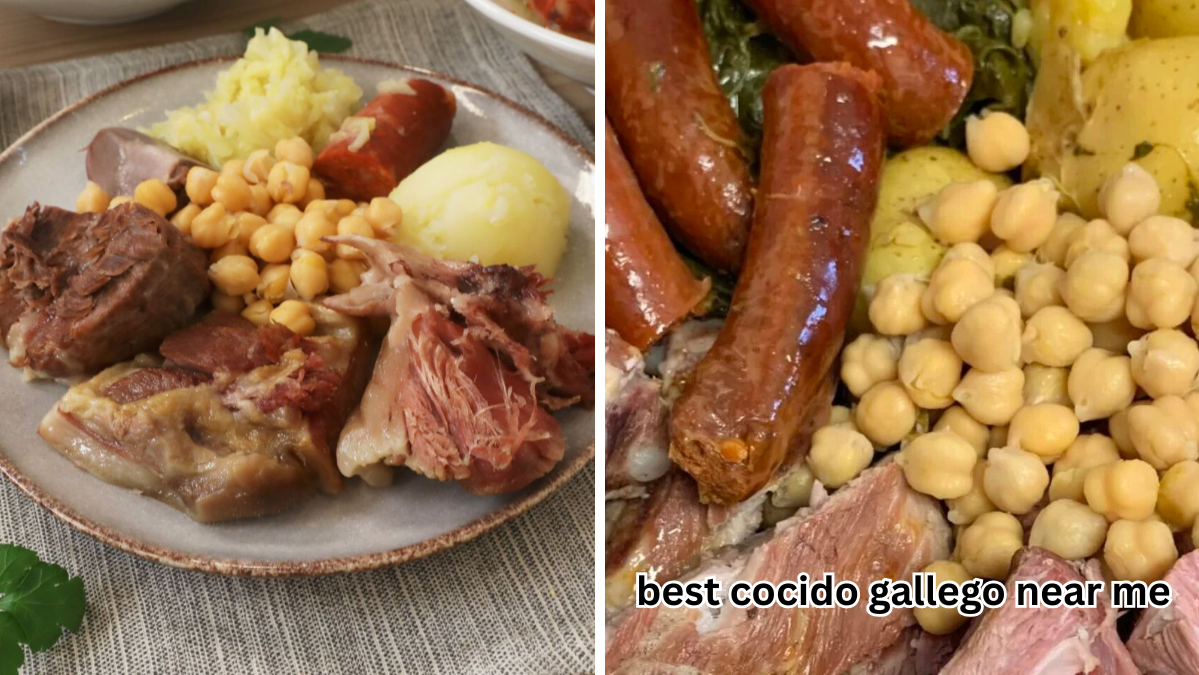
Searching for best cocido gallego near me usually starts with a simple craving, but it often ends as a much more rewarding food adventure. This is not a light bowl of soup or an ordinary Spanish stew. Cocido gallego is a generous, slow-cooked meal shaped by the landscapes, farms, family kitchens, and cool weather traditions of Galicia in northwestern Spain. A proper serving feels comforting before you even lift the spoon, with a deep broth, tender meats, soft beans, potatoes, and greens that absorb the character of the pot. The best versions are hearty without becoming careless, rustic without feeling heavy, and rich without hiding the ingredients behind salt or grease.
Finding a memorable local plate takes more than choosing the restaurant with the closest pin on a map. The phrase best cocido gallego near me should lead you toward kitchens that understand patience, balance, and the importance of serving a dish at the right moment. Some restaurants prepare it only when the weather turns cool, while others make it a cherished weekend specialty. Some offer a polished dining-room version, while others keep it wonderfully homespun. This guide helps you recognize the details that separate a merely filling stew from an honest Galician feast that deserves a return visit.
Understanding Cocido Gallego Before You Search
Cocido gallego is often described as a Spanish stew, but that label does not fully explain the experience. The dish is built around a slow-simmered pot where meats, beans, potatoes, greens, and aromatics gradually share flavor. The final result may arrive in separate portions or together in a generous bowl, depending on the cook and the restaurant. In either style, the real goal is harmony. The broth should carry the savory depth of cured pork and vegetables without becoming muddy, while every ingredient should still taste like itself.
When you know what belongs in the pot, local searching becomes much easier. Traditional versions commonly include pork in several forms, smoky chorizo, white beans, potatoes, and leafy greens such as grelos, turnip greens, or kale. Exact ingredients can vary by household, season, and ingredient availability, so authenticity is not about demanding a single fixed recipe. It is about noticing whether the kitchen treats the ingredients with care and whether the final dish has the warmth, clarity, and generosity that make cocido gallego special.
Why Local Results Can Be Misleading
Online results can be useful, yet they can also flatten very different dishes into the same category. A restaurant may use the word cocido for a broad range of Iberian stews, and some menus use it for a quick, simplified dish that has little connection to Galician cooking. That does not automatically make the food bad, but it does mean you should read the description rather than rely on the name alone. Look for menu language that mentions Galician roots, slow cooking, beans, greens, cured pork, chorizo, or a house-made broth.
The best search results also depend on what sort of experience you want. A formal Spanish restaurant may serve a refined version in a composed presentation, while a family-run spot may bring a large communal platter that feels closer to a Sunday meal. Neither approach is automatically better. The useful question is whether the restaurant is clear about what it serves and whether diners describe the dish in terms of flavor, comfort, freshness, and care. Vague praise about big portions is far less helpful than specific comments about broth, greens, tender meat, and proper seasoning.
How to Recognize a Properly Made Broth
The broth is the quiet center of a good cocido gallego. It may look simple, but its flavor reveals how the kitchen handled the entire pot. A well-made broth is savory, rounded, and fragrant rather than aggressively salty or oily. It should have enough body to feel nourishing, yet it should still be clean enough that you can taste the greens, beans, and pork behind it. When a broth is rushed, it often tastes flat, watery, or harshly seasoned. When it is overworked, it can become cloudy and heavy.
A thoughtful kitchen also knows that richness needs balance. Cured meats bring salt and smoke, while vegetables add earthiness and a faint sweetness. Beans provide softness and starch, and potatoes lend comfort without taking over. The finished broth should bring those elements together instead of turning them into one indistinct flavor. When you are choosing where to eat, descriptions that mention a long-simmered stock or house broth are encouraging signs, especially when reviews note that the dish feels flavorful but not greasy.
The Role of Meats in an Authentic Pot
Pork gives cocido gallego much of its personality. Depending on the kitchen, the pot may include ribs, shoulder, bacon-like cuts, cured pork, chorizo, and other traditional pieces that offer varying textures and levels of richness. This variety is not only about abundance. Each cut contributes differently to the broth, so the finished meal can have layers of smoke, salt, fat, gelatin, and sweetness. A strong version does not taste like a pile of random meat. It tastes like a carefully chosen combination that has had time to soften and mingle.
Pay attention to tenderness and restraint when you order. The meats should be soft enough to yield easily, but they should not be dry, stringy, or collapsed into flavorless shreds. Chorizo should taste smoky and seasoned, not overly sharp or greasy. Cured pork should add depth rather than dominate every bite. Restaurants that prepare the dish with care usually let the meats support the vegetables and broth instead of using them as a shortcut for salt. That balance matters more than how many different cuts appear on the plate.
Greens, Potatoes, Beans, and Comfort
The vegetables in cocido gallego are not decorative extras. They are essential to the dish’s identity and help keep the pot from becoming overly rich. Greens are especially important because they bring a gentle bitterness and a mineral quality that cuts through the pork. In Galicia, grelos are a familiar choice, but outside the region, cooks may use turnip greens, kale, cabbage, or another sturdy leaf. A good substitute can work beautifully when it is cooked with respect and still keeps some character.
Potatoes and beans provide a different kind of comfort. Potatoes soak up the broth and give each bite a soft, familiar warmth, while beans make the stew feel substantial and complete. They should be tender without breaking apart into a paste. When the ingredients are properly cooked, you can taste the difference between a dish that has been held too long and one that has been cared for through service. The best bowls feel satisfying because every component earns its place, not because the kitchen has made the serving excessively heavy.
How Seasonality Shapes the Best Experience
Cocido gallego naturally suits cool days, rainy evenings, and long, relaxed meals. That does not mean you cannot enjoy it at another time of year, but seasonality often influences how well a restaurant prepares it. A kitchen that treats the dish as a seasonal specialty may be more likely to make it in careful batches, use appropriate greens, and serve it when diners are ready to appreciate its full comfort. Seasonal menus can also signal that the restaurant is willing to let ingredients guide the cooking rather than forcing the same dishes onto the menu every day.
When you search best cocido gallego near me, check whether nearby restaurants announce it as a weekend feature, a cold-weather offering, or a special family-style meal. Those details can be more meaningful than a generic menu listing. They suggest that the dish has a place in the restaurant’s rhythm rather than being an afterthought. Of course, a year-round version can still be excellent, but the kitchen should show the same care through fresh greens, balanced portions, and a broth that tastes recently prepared rather than reheated beyond recognition.
Reading Restaurant Menus Like an Insider
Menus often tell you more than they seem to at first glance. Look for descriptions that name core elements such as white beans, greens, potatoes, pork, chorizo, or broth. A restaurant does not need to publish a full recipe to inspire confidence, but a thoughtful description usually signals that the staff knows what makes the dish distinctive. Phrases like house-made stock, slow-cooked, Galician style, or served family-style can be helpful when they are backed up by specific ingredients and consistent reviews.
It is also useful to notice what else appears on the menu. A restaurant that serves other regional Spanish dishes with care may be more likely to understand cocido gallego than a place offering a broad and unrelated selection. Dishes from Galicia, such as octopus preparations, empanadas, seafood plates, or rustic vegetable dishes, can hint at a deeper regional focus. This is not a rigid rule, because talented chefs can cook beyond their personal background. Still, a menu with a coherent point of view often gives you a better chance of finding a stew with real character.
Questions Worth Asking Before You Order
A simple question can save you from disappointment and make the meal more enjoyable. Ask whether the cocido is prepared that day, whether it is served in separate components, and whether the greens are traditional or locally substituted. These are not demanding questions. They show that you are interested in the dish and help the staff guide you toward the right choice. A knowledgeable server will usually be happy to explain the style of the house version and how substantial the portion is.
You can also ask about saltiness, spice, and sharing. Cured pork and chorizo can make the dish more assertive than some diners expect, so it is useful to know whether the restaurant serves a lighter or more robust broth. For a table that wants variety, ask whether the stew is available as a shared platter or whether the kitchen can bring extra broth separately. Good hospitality matters here. The best restaurants treat questions as part of the dining experience rather than as an inconvenience, and that confidence often reflects the care happening in the kitchen.
Dine-In, Takeaway, and Delivery Considerations
Cocido gallego is at its best when served fresh, because the broth, greens, beans, and meats are all at their ideal texture. Dining in allows you to enjoy the steam, aroma, and presentation as intended. It also gives you a chance to ask questions, request broth on the side, or pace the meal properly. A restaurant may serve the components in an order that makes sense for the style of its kitchen, and that small detail can make the experience feel more complete.
Takeaway can still work well when the restaurant packs the dish intelligently. Broth should be sealed separately from delicate greens when possible, and meats should not be buried under potatoes until everything turns soft and indistinct. Delivery requires a little more caution, especially if the restaurant is far away or the meal will sit for a while. Read recent comments that mention packaging and reheating quality. A good local option will give clear instructions and pack the elements in a way that protects flavor rather than simply filling a container.
How to Use Reviews Without Being Misled
Reviews are most useful when they describe concrete details. Search for diners who mention the broth, the tenderness of the pork, the quality of the beans, or the freshness of the greens. These observations are more valuable than short comments that only say the food was amazing or the portions were huge. Specific descriptions help you imagine how the dish actually tastes and whether it matches what you want from a traditional, hearty Galician stew.
It is wise to read both praise and criticism with perspective. A diner who wanted a light lunch may dislike a rich stew even when the restaurant made it well. Another diner may praise a massive serving while overlooking a broth that is too salty. Look for patterns rather than single opinions. When several people mention balanced seasoning, warm service, and a clear homemade quality, that is a stronger sign than a long list of generic compliments. Recent reviews are especially valuable because they reflect the current kitchen and current service habits.
Finding Regional Spanish Restaurants in Your Area
The exact phrase best cocido gallego near me may not always bring up every worthy restaurant, especially when a menu uses Spanish spelling, a regional label, or a seasonal special that is not heavily promoted. Broaden the search gently by looking for Galician restaurants, regional Spanish dining, Iberian comfort food, or Spanish family-style meals. Check restaurant social pages, event listings, and current menus, since many kitchens announce cocido only when they plan to prepare a batch.
Smaller restaurants can be particularly rewarding because they may cook the dish in limited quantities and sell out once the pot is gone. That is not a guarantee of quality, but it can be a good sign when paired with clear menu information and enthusiastic local feedback. Call ahead when the menu is unclear. A brief conversation can reveal whether the restaurant makes cocido regularly, whether it is available that day, and whether the chef uses a traditional approach or a personal adaptation. That small effort often leads to a better meal than relying on search rankings alone.
Signs That a Kitchen Respects Tradition
Respecting tradition does not mean refusing every adaptation. Ingredients vary across regions, and skilled chefs sometimes need to work with local produce or different cuts of meat. What matters is whether the kitchen understands the logic of the dish. The broth should have depth, the greens should bring balance, the beans should feel integral, and the pork should be handled with restraint. A restaurant can make a modern presentation while still preserving the slow-cooked spirit that makes cocido gallego comforting.
You can often sense this respect in the way the dish is explained. Menus and servers that speak clearly about ingredients, cooking time, or regional inspiration usually inspire more confidence than vague labels. Watch for a kitchen that treats the stew as a complete meal rather than a novelty item. The goal is not to test the chef on regional purity. The goal is to find a place where the dish has been considered from start to finish, with every component given the attention it needs.
Pairing Drinks and Sides With Cocido Gallego
A meal as generous as cocido gallego does not need an overloaded table, but a thoughtful drink and a simple side can improve the experience. Crisp Spanish white wine can complement the greens and cut through the pork, while a lighter red can work well when the broth has deep smoky notes. Cider is another natural match, especially for diners who enjoy a refreshing contrast to the stew’s warmth. The best pairing is one that cleanses the palate and lets the pot remain the main focus.
Bread is often the most useful side because it gives you a way to enjoy every bit of broth without distracting from the dish. A simple salad can also add freshness, particularly when the stew is served as the center of a longer meal. Avoid treating the table like a contest of richness. Heavy fried starters, creamy sauces, and overly sweet drinks can dull your appetite before the cocido arrives. A smart meal feels relaxed and balanced, leaving space to appreciate the depth of the main dish.
How to Judge Value Rather Than Portion Size
Large portions are common with cocido gallego, but size alone does not define value. A huge bowl that is oily, poorly seasoned, or packed with soft, overcooked ingredients can leave you less satisfied than a carefully made serving with a clear broth and good balance. Consider the quality of the meats, the freshness of the vegetables, the generosity of the beans, and the overall care in preparation. A restaurant that uses good ingredients and serves them thoughtfully may charge more, yet still offer a better experience.
Value also comes from how the meal makes you feel after eating. A proper cocido should be filling, but it should not feel like a blunt weight in your stomach. The greens and beans should bring enough balance that you remember the flavor, not only the fullness. Notice whether the staff explains the dish, whether the room feels comfortable, and whether the meal arrives at a good temperature. Dining is a complete experience, and the most worthwhile restaurant is often the one that makes the stew feel generous in every sense.
The Difference Between Homemade and Restaurant Style
Homemade cocido gallego often carries the memory of a particular family, season, or town. Some cooks prefer a stronger cured-pork flavor, while others make a lighter broth that emphasizes vegetables. Some serve the components separately, and others bring them together in a big, welcoming pot. Restaurant versions may be more consistent from visit to visit, but a good restaurant should still preserve a feeling of warmth and abundance rather than making the dish feel mechanical.
When comparing local options, do not reject a restaurant version just because it is not identical to someone’s family recipe. The best restaurants acknowledge that regional food has many valid expressions. What you should look for is care, confidence, and balance. A chef who understands the tradition can make reasonable substitutions without losing the dish’s soul. The most satisfying bowl often feels personal rather than standardized, even when it arrives from a professional kitchen.
Planning a Meal for Family or Friends
Cocido gallego is especially good for sharing because it encourages diners to slow down and enjoy the table together. When you are choosing a restaurant for a group, ask whether the kitchen offers shared portions, whether the dish needs to be ordered ahead, and whether the serving style works for everyone. A large pot can turn a regular meal into a memorable gathering, particularly when paired with simple starters, bread, and an easygoing drink.
Good planning also means thinking about appetite and timing. This is a substantial dish, so a group may be happier with lighter starters and enough room to linger over the main meal. Reserve a table when the restaurant is known for weekend service or limited-batch specials. Tell the staff if your group wants a relaxed, shareable experience rather than separate rushed plates. Restaurants that make cocido well often appreciate notice because it lets them prepare and serve the dish at its best.
Handling Dietary Needs With Respect
Traditional cocido gallego is built around pork, so it may not suit every diner. That does not mean a group has to avoid the restaurant entirely, but it does mean clear communication matters. Ask whether the kitchen can offer a vegetable-focused alternative, a seafood dish, or another regional specialty for guests who do not eat meat. Do not assume that removing the meat will create a vegetarian version, since the broth itself is commonly enriched with pork.
Allergies and sensitivities deserve the same care. Beans, greens, cured meats, and seasoning blends can vary, and cross-contact can happen in a busy kitchen. Speak with the staff before ordering, especially if someone has a serious dietary restriction. A confident restaurant will explain what is possible without making promises it cannot keep. Respectful planning protects the guest and gives the kitchen a fair chance to provide a satisfying meal for everyone at the table.
Returning to Places Worth Recommending
A great cocido experience usually becomes better when you return. On a later visit, you may notice different greens, a slightly different broth, or a seasonal change in the balance of the plate. These variations can be part of the charm when the kitchen remains thoughtful. Returning also lets you see whether the restaurant has consistency, which is far more meaningful than a single lucky meal.
When you find a place that deserves praise, recommend it with specifics. Mention the rich but balanced broth, the tender meats, the careful use of greens, or the welcoming service. Specific recommendations help other diners find the right kind of meal and reward restaurants that put real effort into regional cooking. Word of mouth remains powerful for dishes like cocido gallego because the most authentic versions are often made by small kitchens that rely on loyal local guests.
Exploring Galicia Through the Dish
Cocido gallego offers more than comfort; it gives you a glimpse into Galicia’s food culture. The dish reflects a way of cooking that values thrift, seasonality, patience, and generosity. It uses humble ingredients, yet it transforms them through time and technique into something deeply satisfying. The meal feels connected to fields, markets, winter weather, and family tables, even when you enjoy it far from Spain.
Learning this context can make your restaurant search more rewarding. Instead of chasing a label, you begin to appreciate the choices behind the food: the greens that brighten the pot, the beans that make it substantial, the cured pork that builds flavor, and the slow simmer that brings everything together. A restaurant that understands those choices can offer a dish that feels rooted and alive rather than copied from a short recipe card.
Choosing the Right Time to Visit
Timing can influence your experience more than many diners expect. A restaurant may prepare cocido in limited batches, which means visiting early or reserving ahead can matter. During a busy service, a popular pot may sell out, or the kitchen may have less flexibility with special requests. Checking the menu shortly before you go can prevent disappointment and help you arrive when the dish is at its freshest.
It can also be worth choosing a time when you can enjoy the meal without rushing. Cocido gallego rewards a slower pace because the flavors unfold gradually and the serving can be generous. A quiet lunch, a relaxed evening, or a shared weekend meal often suits it better than a hurried break between errands. Give yourself room to taste the broth, share the sides, and enjoy the sense of occasion that comes with a properly prepared pot.
Building Your Own Local Shortlist
The most practical way to find a dependable favorite is to build a small personal shortlist. Keep track of restaurants that offer regional Spanish cooking, places that receive detailed praise for their stews, and kitchens that post regular seasonal menus. Save notes about what appealed to you, such as a clear broth, house-made chorizo, tender beans, or a warm family-style atmosphere. Over time, this becomes far more useful than repeatedly starting from scratch.
Use best cocido gallego near me as a starting point, then let your own taste guide the final choice. Some diners prefer a smokier, meatier version, while others love a greener, broth-forward pot. There is room for both preferences when the cooking is careful. By paying attention to the details that matter to you, you will be able to recognize a restaurant that offers not just a filling dish, but a meal worth anticipating.
Paying Attention to Temperature and Service
A stew can be beautifully cooked and still lose some appeal if it reaches the table lukewarm. Cocido gallego should arrive hot enough for the broth to release its aroma, but not so hot that every flavor feels hidden behind steam. Temperature is part of the restaurant’s care. It shows whether the kitchen understands that the dish is meant to soothe and awaken the appetite at the same time. Warm bowls, fresh bread, and a brief explanation from the server can make a simple service feel generous.
When you are comparing options after searching best cocido gallego near me, look for diners who mention prompt service and food arriving at the right temperature. These details may sound small, yet they affect a slow-cooked meal more than people realize. Potatoes can become dull when held too long, greens can lose their character, and fat can rise heavily to the surface if the broth waits in a pass. A restaurant that manages service well protects the work that went into the pot.
What Good Hospitality Tells You
Hospitality can reveal a lot about a restaurant’s relationship with its food. A server who can explain the broth, the greens, or the house style of the stew is not merely reciting a menu. They are helping guests understand why the dish deserves attention. This does not require formality or culinary lectures. The best service often feels relaxed, friendly, and confident, with the staff offering useful guidance without making diners feel inexperienced.
Notice whether the restaurant seems proud of its regional cooking. Pride often appears in small gestures: offering extra broth when appropriate, suggesting a simple side, explaining that the dish is designed for sharing, or warning guests about the richness of the cured meats. These habits do not guarantee perfection, but they make a strong meal more likely. A place that cares about how you experience cocido gallego usually cares about the pot itself.
Avoiding Common Search Mistakes
The most common mistake is assuming that every dish called cocido follows the same tradition. Spain has many beloved stews, and each region brings different ingredients, techniques, and expectations to the table. Some are bean-heavy, some lean toward vegetables, and others feature a completely different selection of meats. Reading a description before booking helps you avoid arriving with the wrong expectation. It also gives you a chance to discover other regional dishes without confusing them with Galician cocido.
Another mistake is letting a single rating decide everything. Restaurants can have high overall ratings because of tapas, cocktails, service, or atmosphere, while the specific stew you want may be only an occasional special. Search the reviews for the dish itself, and look at recent photos with a careful eye. A bowl that looks glossy with oil or crowded with overly soft ingredients may not offer the balance you want. By slowing down your search, you become much more likely to choose a place that matches the craving behind best cocido gallego near me.
How Local Ingredients Can Change the Pot
Outside Galicia, exact regional ingredients are not always easy to find. A thoughtful chef may use local greens, a different white bean, or a carefully selected pork cut that fits the spirit of the dish. These changes can be entirely reasonable when the cook understands the flavor balance. The important question is whether the substitute performs the same job in the pot. Greens should bring freshness and gentle bitterness, beans should remain creamy yet intact, and meat should enrich the broth without overwhelming it.
Local sourcing can even give a restaurant version its own appealing personality. A farmer’s market kale may be more vibrant than imported greens that have spent too long in transit, and locally cured pork can add a distinctive character. What should not change is the slow, patient structure of the meal. A restaurant that adapts ingredients while preserving that structure is often showing more respect than one that insists on labels but produces a flat, careless stew.
Balancing Appetite Before and After the Main Dish
Because cocido gallego is so satisfying, it helps to build the rest of the meal around it with restraint. Start with a light aperitif, a few olives, a simple salad, or a modest seafood plate rather than an array of rich fried dishes. You want to arrive at the main course hungry enough to appreciate it, not already full from snacks. This approach lets the broth and greens remain vivid instead of becoming lost beneath an overly heavy meal.
Dessert can be equally simple. Fresh fruit, a small custard, or a light pastry can end the meal pleasantly without competing with the savory depth of the stew. Coffee or tea may also be enough, especially after a leisurely shared lunch. The point is not to limit enjoyment. It is to give the cocido the space it deserves. Restaurants that understand this often offer balanced menus where each course supports the next rather than demanding attention for itself.
Visiting With Curiosity Rather Than Strict Rules
There is joy in knowing the traditional building blocks of cocido gallego, but strict rule-making can get in the way of a good meal. Regional dishes naturally vary among families and towns, and restaurants also need to respond to local ingredients and diner preferences. Instead of looking for a flawless replica of a single version, look for signs of understanding. Does the broth have depth? Are the ingredients balanced? Does the dish feel generous and carefully made? Those questions are more useful than demanding that every bowl look identical.
This mindset also makes restaurant conversations more enjoyable. Ask how the chef prepares the pot, listen to the answer, and taste with an open mind. You may find that a local interpretation offers a memorable detail that would never appear in another version. A slightly greener broth, a different style of chorizo, or a brighter vegetable garnish can add personality when handled well. The dish becomes a living tradition rather than a fixed museum piece.
Following Specials and Community Events
Some of the most rewarding cocido meals appear outside regular menus. Spanish cultural events, regional food festivals, chef collaborations, and winter community dinners may feature the dish for a limited time. These occasions can be a good chance to try a more traditional, communal version, especially when the organizers work with cooks who know the regional style. Follow local Spanish restaurants and food groups so you can spot these announcements before the meal sells out.
Event dining also brings a social energy that suits cocido gallego. Sharing a large pot with people who are equally curious about the food can turn dinner into a cultural experience rather than a simple reservation. Still, use the same standards you would at any restaurant. Look for clear details about the menu, thoughtful cooking, and a setting where the dish can be served hot and properly paced. The strongest events make the meal feel abundant, relaxed, and connected to the traditions behind it.
Trusting Your Own Taste After the Search
Reviews and menus can guide you, but your own palate should make the final decision. After trying a few places, think about what stayed with you. Perhaps you loved a broth with a smoky edge, or perhaps you preferred a lighter bowl where the greens stood out. Maybe you enjoyed a restaurant that served the ingredients separately, or perhaps a single generous bowl felt more comforting. These preferences are valuable because they help you search with more precision the next time.
The phrase best cocido gallego near me can lead you to many options, but the best choice is the place that delivers the experience you personally enjoy. Keep notes, revisit strong restaurants, and do not be afraid to order a house variation when it sounds well considered. Food traditions are most rewarding when they invite you to taste, compare, and return with greater appreciation. Once you understand the character of cocido gallego, your local search becomes less about chasing rankings and more about finding a meal that feels right.
Reading Food Photos With a Critical Eye
Photographs can help when you use them thoughtfully. A good image may show whether the broth is clear, whether greens still have color, and whether the beans and potatoes look cared for. It can also reveal the serving style, which matters for diners deciding between a composed plate and a communal bowl. Still, photos cannot tell you everything. Lighting can make food look richer or fresher than it was, and a single image may not reflect the current kitchen.
Use photos as supporting evidence rather than proof. Compare images from the restaurant with recent diner uploads and written comments. Look for consistency in the color of the greens, the texture of the beans, and the proportion of broth to solids. When several recent guests show a similar, appealing bowl and describe it with care, you have a much stronger signal than a polished menu photograph alone. This method makes the search for best cocido gallego near me more practical and less dependent on marketing language.
Knowing When a Reservation Is Worth It
A reservation is worthwhile when a restaurant treats cocido gallego as a limited or carefully timed specialty. The dish may require a long preparation, a large pot, and ingredients that cannot simply be assembled at the last minute. Calling ahead shows respect for that work and protects you from arriving after the kitchen has sold the last serving. It can also help the restaurant advise you on portion size, sharing, and the best time to come.
Reservations are not only about securing a table. They can make the meal more relaxed from the moment you arrive. You will have time to enjoy a drink, ask about the dish, and settle into the pace of a generous meal. For groups, advance planning is especially helpful because the kitchen may need to prepare a larger serving or coordinate dietary alternatives. A little organization lets the food take center stage instead of turning dinner into a rushed search for what remains available.
Appreciating Texture as Much as Flavor
Flavor gets most of the attention, but texture is a major reason cocido gallego feels so complete. The beans should be creamy yet present, potatoes should be soft without disappearing, and greens should have enough structure to bring life to the bowl. The meats should offer tenderness with a little contrast between leaner pieces and richer cuts. When all of these textures remain distinct, each spoonful feels balanced and interesting rather than dense and repetitive.
Texture also tells you how the restaurant manages its timing. Overcooked greens and broken beans may suggest the dish sat too long, while tough meat can point to insufficient simmering or poor reheating. None of these faults are minor in a stew built on patient cooking. A well-run kitchen knows when to add delicate ingredients, when to hold the pot, and when to serve it. That technical care is often what turns a rustic dish into an exceptional dining experience.
Letting a Great Meal Guide Future Searches
After a satisfying visit, use what you learned to refine future searches. Remember the restaurant name, the style of broth, the greens it used, and how the meat was served. Those details help you describe what you want when you ask friends for recommendations or search a different neighborhood. They also help you distinguish a personal favorite from a restaurant that was simply convenient on a particular day.
The next time you type best cocido gallego near me, you will be looking with more confidence. You will know that a great result is not defined by a map ranking alone. It comes from a kitchen that understands slow cooking, regional character, ingredient balance, and warm service. That knowledge turns a casual craving into a reliable way of finding food that feels generous, rooted, and genuinely worth sharing.
Bringing the Search Together
The answer to best cocido gallego near me is rarely a single universal restaurant. It is the place that cooks with patience, chooses ingredients thoughtfully, serves the dish with balance, and makes you feel welcome at the table. The best bowl may come from a polished Spanish dining room, a modest neighborhood restaurant, or a small kitchen that only makes cocido when the season feels right. Search widely, read carefully, ask simple questions, and trust the signs of real care.
A memorable cocido gallego should leave you satisfied, warmed, and curious to return. You should remember the savory broth, the tender meats, the earthy greens, and the gentle comfort of beans and potatoes working together. Once you have found a restaurant that gets those details right, the search becomes easy. You have found more than a meal. You have found a local place that brings a piece of Galicia to your table.
Read also How to Find the Best Ensalada de Arroz Near Me and Enjoy Every Bite