
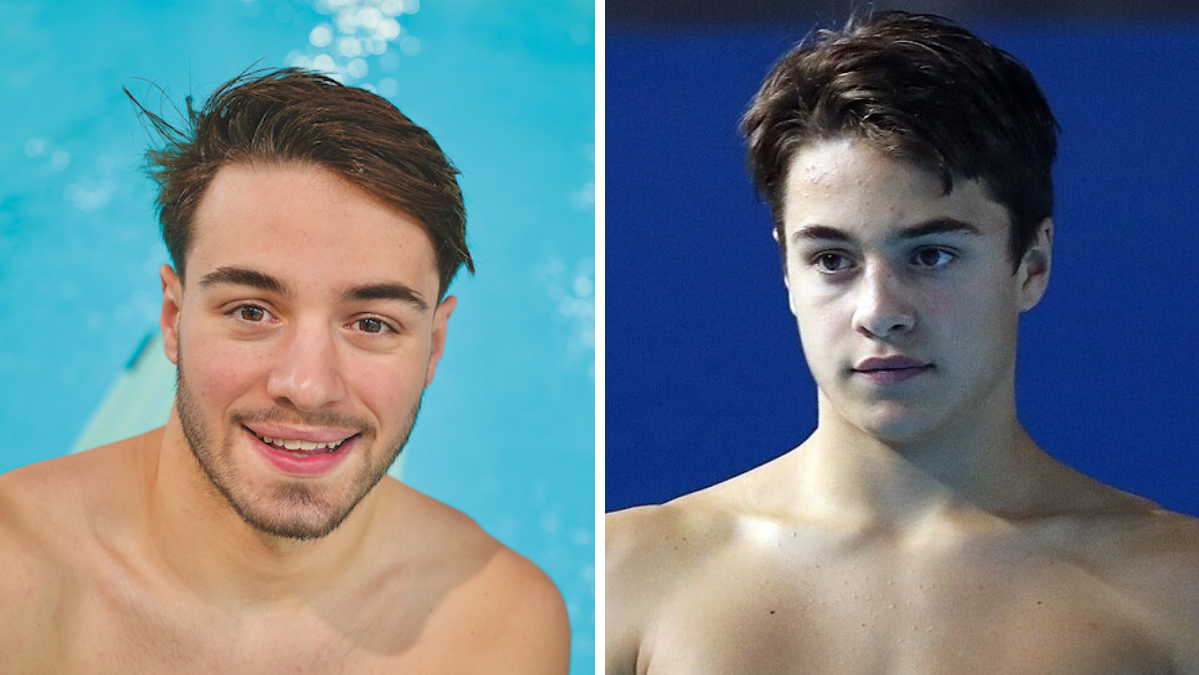
When conversations turn toward emerging names in international diving, one athlete consistently stands out for his composure, athleticism, and rapidly growing reputation. Jules Bouyer has become one of the most talked-about figures in competitive diving thanks to a combination of technical precision, physical discipline, and the kind of mental focus usually associated with far more experienced competitors. His rise has not been accidental. It reflects years of structured preparation, relentless consistency, and a clear understanding of what elite diving demands at the highest level.
In recent years, the global diving scene has evolved dramatically. Athletes are expected to combine artistry with near-perfect biomechanics, while also adapting to increasingly intense competition from powerhouse nations. Within that environment, Jules Bouyer has managed to carve out a distinctive identity. Fans, coaches, and analysts alike have praised his refined technique and mature competitive temperament. Rather than relying solely on natural talent, he has built his career through calculated progress, technical refinement, and a visible commitment to long-term growth.
Part of what makes his story compelling is the balance between elegance and power that appears in his performances. Diving is one of the few sports where aesthetic quality matters almost as much as athletic execution. Every movement is scrutinized, from the launch off the platform to body alignment during rotations and the precision of the water entry. The smallest mistake can significantly impact scoring. Yet despite the pressure, Bouyer has demonstrated an ability to remain calm and technically sharp during major events.
Observers often describe modern elite diving as “controlled chaos.” Athletes perform explosive movements in fractions of seconds while maintaining total body awareness. That description perfectly captures the environment in which Jules Bouyer has developed. He belongs to a generation of divers trained with advanced sports science, detailed video analysis, and highly specialized conditioning systems. The result is a competitor capable of performing under intense scrutiny while continuing to improve event after event.
Another reason his profile has expanded internationally is the increasing visibility of diving across digital media platforms. Fans now follow athletes beyond competitions, paying attention to training routines, preparation methods, recovery strategies, and personal journeys. This has allowed audiences to appreciate the dedication behind the sport. Bouyer’s growing popularity reflects not only his competitive success but also the authenticity of his athletic progression.
As former Olympic diving coach Alexei Ivanov once said, “Great divers are not created in moments of glory. They are built during thousands of unseen repetitions.” That philosophy aligns closely with the career path that Bouyer appears to embody. His performances suggest an athlete deeply committed to mastering details rather than chasing shortcuts.
Early Life, Athletic Background, and the Foundations of Competitive Discipline
Understanding the rise of Jules Bouyer requires looking closely at the environment that shaped him as an athlete. Elite diving careers rarely emerge overnight. They are usually built through years of disciplined training that begins during childhood. Coordination, flexibility, spatial awareness, and fear management all need to be developed early. Bouyer’s athletic journey reflects many of those core principles that define successful divers.
France has steadily improved its infrastructure for aquatic sports over the past several decades. While countries like China, the United States, and Great Britain often dominate headlines in diving, French programs have quietly produced technically gifted athletes capable of competing internationally. Bouyer developed within that growing ecosystem, benefiting from structured coaching and an environment focused on technical progression rather than rushed results.
One important aspect of his development appears to be versatility. Divers who specialize too narrowly at a young age sometimes struggle later when routines become more difficult. Strong foundational athletes usually spend years improving flexibility, gymnastic awareness, trampoline coordination, dryland mechanics, and strength conditioning before fully mastering advanced dives. Bouyer’s performances suggest a background built on comprehensive athletic preparation rather than simple specialization.
Mental resilience is another trait commonly associated with successful divers. Unlike many sports where mistakes can be corrected during ongoing play, diving offers only a single brief performance opportunity. One small timing issue can alter an entire competition result. Young divers therefore learn early how to handle pressure, self-correction, and emotional control. Those skills become especially valuable in international events where crowd intensity and judging pressure increase dramatically.
Many coaches emphasize the psychological side of diving as much as the physical side. Sports psychologist Dr. Marianne Lefevre once explained, “Elite divers succeed because they train their nervous systems to trust movement under pressure.” That observation helps explain why some athletes perform brilliantly in practice but struggle in competition. Bouyer’s consistency in major events suggests strong mental preparation alongside physical ability.
Another key factor in his development likely involved technical patience. Modern diving rewards athletes who build sustainable mechanics over time. Attempting advanced routines too early can increase injury risk and compromise long-term progress. Observers often note the smoothness of Bouyer’s execution, particularly during transitions and water entries. That level of refinement usually reflects years spent mastering fundamentals before adding complexity.
The discipline required in diving also extends beyond the pool. Nutrition, recovery, mobility work, sleep quality, and injury prevention all play major roles in an athlete’s longevity. High-level divers subject their bodies to repeated impacts and rotational stress, making comprehensive conditioning essential. Bouyer’s ability to compete consistently at a high level indicates strong overall athletic management.
There is also the challenge of balancing individuality with technical structure. Judges evaluate objective criteria, but athletes still need to develop a recognizable style. Some divers become known for explosive power, others for graceful form or exceptional consistency. Bouyer appears to combine several of those qualities, which helps distinguish him from many contemporaries.
The path from promising junior athlete to respected international competitor is rarely straightforward. Injuries, performance plateaus, coaching transitions, and competitive setbacks are common in diving. Athletes who continue progressing usually possess a strong internal motivation that extends beyond medals alone. Bouyer’s career trajectory suggests a competitor driven not just by results but by continual technical improvement.
The Technical Art of Diving and What Makes Elite Performers Stand Out
To appreciate the significance of Jules Bouyer’s performances, it helps to understand how technically demanding competitive diving truly is. Casual viewers often focus on the splash at the end of a dive, but judges evaluate every phase of movement from takeoff to entry. Elite diving combines biomechanics, body control, timing, flexibility, and psychological composure in ways few sports require.
At the highest level, divers must generate rotational speed while maintaining perfect body alignment. This becomes increasingly difficult as routines grow more complex. Tiny deviations in body positioning can affect rotation speed, entry angle, and overall execution scores. Athletes train thousands of repetitions to build movement patterns that become instinctive under pressure.
One defining characteristic of elite divers is spatial awareness. During rapid rotations, athletes must know exactly where their bodies are relative to the water and platform. This awareness develops over years of repetition and nervous system adaptation. Bouyer’s routines frequently display strong orientation control, particularly during transitions between rotational phases and final alignment before entry.
Water entry itself is among the most difficult components of diving. The goal is to enter vertically with minimal splash, which requires perfect timing and body tension. Even slight over-rotation or under-rotation can create visible splash and reduce scores. Fans often underestimate how physically demanding this precision becomes after multiple high-difficulty dives in a single competition.
Strength-to-weight ratio also plays a massive role in elite diving performance. Divers need explosive leg power for takeoff while remaining lean enough to rotate efficiently. Core strength is particularly important because it stabilizes body positioning during spins and twists. Conditioning programs therefore include gymnastics-style training, plyometrics, mobility work, and extensive dryland exercises.
Another major factor is consistency. Some athletes can execute difficult dives occasionally but struggle to reproduce them reliably under competition conditions. International diving rewards athletes who combine difficulty with repeatable execution. Bouyer’s reputation has grown partly because of his ability to maintain composure and technical clarity even in high-pressure environments.
Judging adds another layer of complexity. Unlike purely objective sports measured by time or distance, diving scores involve human evaluation. Athletes therefore need routines that not only meet technical standards but also appear visually clean and confident. Presentation, rhythm, and flow matter significantly. Bouyer’s diving style has often been praised for its smooth execution and polished appearance.
Modern technology has transformed training methods as well. High-speed cameras, biomechanical analysis software, and motion tracking systems allow coaches to study movements frame by frame. This enables athletes to refine tiny details that might previously have gone unnoticed. Elite divers today train with a level of technical precision unimaginable several decades ago.
Recovery science has also become essential. Repeated impacts from water entry can stress joints, shoulders, hips, and lower backs. Divers therefore incorporate mobility therapy, physiotherapy, and carefully structured recovery sessions into weekly routines. Long-term success increasingly depends on intelligent workload management rather than simply training harder.
The psychological side of competition remains equally important. Divers perform in silence before crowds, fully aware that a single mistake can define the outcome. That pressure creates unique mental demands. Confidence, emotional regulation, and focus become as valuable as physical ability. Bouyer’s calm competitive demeanor suggests strong psychological preparation that complements his technical skills.
Former Olympic champion Greg Louganis famously stated, “Diving teaches you to control fear while trusting preparation.” That idea captures the essence of elite diving perfectly. Athletes launch themselves into highly complex movements while relying entirely on training and instinct. Bouyer’s continued emergence on the international stage reflects mastery of both dimensions.
International Competitions, Recognition, and Growing Global Attention
The transition from national-level competitor to internationally recognized athlete is one of the most difficult steps in sports. Domestic success does not always translate globally, especially in diving where the talent pool is exceptionally deep. Yet Jules Bouyer has increasingly proven capable of competing under international pressure, attracting attention from analysts and fans across the aquatic sports world.
Global diving competitions present unique challenges. Athletes must adjust to unfamiliar venues, changing travel schedules, diverse judging panels, and intense media attention. Consistency becomes more difficult when routines are performed under those conditions. Competitors who thrive internationally usually possess not only technical ability but also adaptability and emotional control.
Bouyer’s growing recognition reflects his ability to navigate those demands effectively. His performances have demonstrated maturity beyond what many expect from emerging athletes. Rather than appearing overwhelmed by major events, he has often looked composed and technically disciplined. That quality is especially valuable in diving because nervousness directly affects timing and body coordination.
International tournaments also expose athletes to varied diving styles. Different countries emphasize different training philosophies. Chinese divers are often admired for precision and consistency, while some European programs emphasize fluidity and artistic execution. Exposure to those global standards pushes athletes to evolve continuously. Bouyer’s progression suggests he has adapted well within that highly competitive landscape.
Media attention has expanded significantly around aquatic sports in recent years. Social platforms now highlight training footage, behind-the-scenes preparation, and athlete interviews, helping audiences connect with competitors on a more personal level. This increased visibility has contributed to Bouyer’s rising public profile. Fans appreciate not only performances but also the dedication required to reach elite status.
Another factor increasing attention around his career is the broader evolution of French sports culture. France has invested heavily in athlete development programs across multiple disciplines, particularly those connected to Olympic competition. Divers representing the country now compete with greater technical sophistication and international confidence than in earlier decades.
Performance consistency is often what separates respected athletes from temporary sensations. Some competitors produce occasional standout results but struggle to maintain momentum. Bouyer’s reputation has grown because his progression appears sustainable rather than accidental. Coaches and commentators increasingly view him as a serious long-term presence in international diving.
Travel and competition schedules also test athletes physically and mentally. Jet lag, changing training environments, and compressed event timetables can disrupt preparation. Elite divers therefore develop routines designed to maintain stability regardless of location. Nutrition planning, sleep management, and mental preparation become critical during international tours.
The pressure of representing one’s country adds another dimension. Athletes competing internationally often feel responsible not only for personal success but also for national expectations. Managing that pressure requires maturity and emotional discipline. Bouyer’s composed demeanor during competition suggests a strong ability to channel expectations productively.
Commentators have frequently highlighted the aesthetic quality of his dives. In a sport where presentation matters greatly, visual fluidity can leave lasting impressions on judges and audiences alike. Clean lines, controlled entries, and balanced rotational mechanics all contribute to an athlete’s reputation over time.
As diving analyst Marc Delacroix noted during a European competition broadcast, “You can teach difficulty, but true composure under pressure is much harder to develop.” That observation captures one reason Bouyer continues attracting attention internationally. His performances increasingly reflect both technical competence and competitive poise.
Training Philosophy, Physical Conditioning, and the Demands of Elite Preparation
Behind every polished competition performance lies an enormous amount of unseen preparation. Diving may last only seconds during competition, but those seconds are built upon years of highly structured physical and mental conditioning. The training environment surrounding Jules Bouyer reflects the modern reality of elite athletic development, where science, repetition, and recovery all matter equally.
Daily diving preparation typically extends far beyond time spent in the pool. Elite athletes divide training between water sessions, dryland work, flexibility development, trampoline practice, and strength conditioning. Each area contributes to overall performance. Dryland drills help athletes refine mechanics safely before transferring movements into full dives.
Core stability remains one of the most important physical attributes in diving. Rotational speed and body alignment depend heavily on abdominal and lower back control. Divers therefore perform extensive bodyweight exercises, static holds, and explosive movement drills designed to improve midline stability. Bouyer’s body control during rotations suggests exceptional conditioning in this area.
Flexibility is equally critical. Tight hips, shoulders, or hamstrings can reduce execution quality and limit body positioning during pike or tuck movements. Elite divers spend significant time on mobility training to maintain fluid mechanics while reducing injury risk. This aspect of preparation often receives less public attention despite being essential for long-term success.
Explosive power also defines elite diving performance. Athletes must generate height from the springboard or platform while maintaining precise timing. Strength programs therefore focus on lower-body explosiveness without adding unnecessary muscle mass that could affect rotation speed. Efficient force production matters more than sheer size.
Mental rehearsal is another major component of modern diving preparation. Many athletes visualize dives repeatedly before competition, mentally rehearsing timing, body positions, and water entries. Sports psychologists often work alongside coaches to help divers manage anxiety and build competitive focus. Bouyer’s calm demeanor during high-pressure routines likely reflects significant psychological training.
Recovery strategies have become increasingly advanced within elite sports environments. Ice therapy, physiotherapy, mobility sessions, massage treatment, and sleep optimization all help athletes sustain demanding workloads. Divers experience repeated impact forces during water entry, making recovery management particularly important for shoulders, hips, knees, and lower backs.
Coaches also rely heavily on video analysis. Slow-motion playback allows athletes to identify technical inefficiencies impossible to notice in real time. Small adjustments in arm positioning, takeoff angle, or rotational timing can produce meaningful scoring improvements. Modern divers are therefore constantly refining details rather than simply repeating routines.
Nutrition supports every aspect of performance and recovery. Divers need enough energy for intense training while maintaining lean physiques that support efficient movement. Meal planning often emphasizes recovery quality, hydration, and sustainable energy management. Proper nutrition becomes especially important during competition periods involving travel and compressed schedules.
Training environments themselves influence athlete development. Positive coaching relationships, structured progression systems, and psychologically supportive atmospheres all contribute to long-term success. Divers often spend years with the same coaching teams, building trust that becomes crucial during high-pressure moments.
Consistency ultimately defines elite preparation. Spectacular performances may capture headlines, but championships are usually built through disciplined repetition over long periods. Bouyer’s progression reflects the effectiveness of sustained technical work combined with intelligent athletic management.
One respected European coach summarized elite diving preparation perfectly: “The audience sees ten seconds. The athlete feels ten thousand hours.” That perspective highlights the extraordinary commitment required to compete successfully at the international level.
Media Presence, Public Image, and the Evolution of Modern Sports Personalities
Athletes today exist in a very different environment compared to previous generations. Success is no longer measured solely by competition results. Public image, digital visibility, and media engagement now shape athletic careers in significant ways. Jules Bouyer has emerged during a period when sports personalities are expected to connect with audiences beyond the competition venue.
Social media has fundamentally transformed athlete visibility. Fans can now follow training sessions, travel experiences, preparation routines, and personal milestones in real time. This creates stronger emotional connections between athletes and audiences. It also increases public expectations, requiring competitors to balance performance pressures with media engagement.
Bouyer’s growing popularity reflects this evolving landscape. Supporters appreciate not only his diving ability but also the professionalism and discipline visible throughout his athletic journey. In many ways, modern fans are drawn toward athletes who appear authentic and committed rather than purely image-focused.
The visual nature of diving also contributes to online popularity. Short clips of clean entries, synchronized movements, and complex rotations often perform extremely well across digital platforms. This has helped aquatic sports reach broader audiences beyond traditional Olympic viewers. Athletes capable of combining technical excellence with visual elegance naturally attract attention.
Public image management has therefore become part of modern sports professionalism. Athletes must navigate interviews, public expectations, sponsorship responsibilities, and constant online commentary. Maintaining focus while handling increased visibility requires maturity and emotional stability. Bouyer’s composed public presence aligns well with the discipline evident in his competitive performances.
Another important factor is representation. Emerging athletes often inspire younger generations entering the sport. Seeing successful competitors from one’s own country can motivate youth participation and increase national interest in aquatic disciplines. Bouyer’s rise contributes positively to the visibility of French diving within international sports culture.
The relationship between athletes and media has also become more personal. Audiences now value stories of perseverance, injury recovery, training dedication, and emotional resilience. Fans want to understand the human side of elite competition rather than viewing athletes as distant figures. Bouyer’s career progression offers exactly the kind of narrative that resonates strongly with modern sports audiences.
Sponsorship opportunities increasingly depend on professionalism and consistency as much as competitive success. Brands often prefer athletes who demonstrate discipline, reliability, and positive public engagement. Divers with growing international visibility therefore become attractive ambassadors for fitness, wellness, and sports-related campaigns.
At the same time, increased visibility can create additional pressure. Every competition, interview, or online interaction becomes subject to public scrutiny. Athletes must learn to manage criticism, expectations, and constant observation without losing focus on performance. This balancing act represents one of the defining challenges of modern sports culture.
Media analysts have frequently noted the calm confidence Bouyer projects during competition broadcasts and interviews. That composure strengthens his reputation as a disciplined and mature competitor. Fans tend to connect strongly with athletes who display professionalism without appearing detached or artificial.
Sports journalist Camille Renard once wrote, “The athletes who endure are usually the ones who stay grounded while the spotlight grows brighter.” That observation feels particularly relevant in Bouyer’s case. His rising profile appears connected not only to talent but also to a steady, measured approach to public attention.
The Competitive Landscape of International Diving and Emerging Generational Change
The world of competitive diving has become extraordinarily demanding over the past two decades. Technical difficulty has increased significantly, judging standards have evolved, and the overall depth of talent has expanded across multiple continents. Within this environment, athletes like Jules Bouyer represent a new generation adapting to rapidly rising expectations.
Historically, a handful of nations dominated international diving. Countries such as China established reputations for systematic athlete development and technical precision, while other nations built strong Olympic traditions through specialized coaching programs. However, the competitive field has broadened considerably. More countries now produce divers capable of reaching elite finals and challenging established powers.
This globalization of talent has increased pressure on all competitors. Athletes can no longer rely solely on isolated technical strengths. Modern diving rewards complete performers who combine difficulty, consistency, presentation quality, and psychological resilience. Bouyer’s progression suggests he understands this broader competitive reality.
Difficulty scores have become especially important in recent years. Divers increasingly attempt more complex routines to remain competitive internationally. Yet higher difficulty also increases execution risk. The best athletes therefore balance ambition with reliability. Bouyer’s performances often reflect intelligent routine construction rather than reckless pursuit of maximum complexity.
Generational transitions also shape the sport. Veteran athletes eventually retire, creating opportunities for emerging competitors to establish themselves internationally. Those transition periods are often unpredictable because younger divers must prove they can handle elite-level pressure consistently. Bouyer’s rise comes during a particularly interesting phase of generational change within global diving.
Coaching philosophies continue evolving as well. Earlier eras often emphasized volume-based repetition, while modern systems increasingly prioritize efficiency, recovery science, and biomechanical precision. Divers now train smarter rather than simply harder. Advanced analytics allow coaches to refine technical details with remarkable accuracy.
Injury prevention has become a major strategic focus. Elite diving places significant stress on joints and connective tissue, particularly during repetitive high-impact entries. Athletes capable of managing physical health effectively usually sustain longer careers. Bouyer’s steady progression suggests careful workload management and strong conditioning support.
Another major change involves athlete professionalism. Divers now approach training with the same level of sophistication seen in other elite Olympic sports. Nutrition specialists, psychologists, physiotherapists, and performance analysts often work together within integrated support teams. This multidisciplinary approach helps athletes maximize performance while minimizing burnout.
Audience engagement has also evolved. Fans now understand diving more deeply thanks to improved broadcasting technology, slow-motion analysis, and educational commentary. Viewers appreciate technical details that once went unnoticed. Athletes with refined execution therefore receive greater recognition from both experts and casual audiences.
International competitions themselves have become more psychologically intense. Qualification standards are stricter, judging scrutiny is higher, and social media amplifies every performance instantly. Athletes must remain mentally stable within environments of constant evaluation. Bouyer’s calm competitive style appears particularly valuable under these conditions.
One veteran analyst summarized modern diving by saying, “Today’s divers compete not only against rivals, but against the sport’s own rapidly advancing standards.” That statement captures the challenge facing all elite athletes in the current era. Bouyer’s ability to rise within such a demanding landscape highlights the significance of his achievements and future potential.
Influence on French Diving and the Broader Aquatic Sports Community
The emergence of high-level athletes often creates ripple effects far beyond individual competition results. Successful competitors can elevate national sports programs, inspire younger athletes, attract media investment, and increase public engagement with specific disciplines. The growing recognition surrounding Jules Bouyer has contributed meaningfully to conversations about the future of French diving.
France has traditionally been respected in various Olympic sports, but diving has sometimes received less international attention compared to swimming, gymnastics, or athletics. Athletes capable of achieving visibility on global stages therefore play an important role in expanding the sport’s domestic profile. Bouyer’s performances have helped draw greater interest toward competitive diving among French sports audiences.
Youth participation often increases when emerging athletes become visible role models. Young competitors need examples they can identify with emotionally and culturally. Seeing a French diver compete confidently at international events reinforces the idea that elite success is achievable within national development systems.
Coaches and sports administrators also benefit from athlete success stories. Strong performances validate training methodologies, funding strategies, and athlete development structures. When divers achieve recognition internationally, it strengthens confidence in broader program direction and encourages continued investment in facilities and coaching resources.
The influence extends beyond medals alone. Athletes who display professionalism, resilience, and disciplined preparation contribute positively to sports culture overall. Bouyer’s reputation reflects not just technical skill but also the values associated with high-level athletic commitment. Those qualities matter deeply within youth development environments.
Aquatic sports communities are often highly interconnected. Divers train alongside swimmers, synchronized swimmers, and other aquatic athletes within shared facilities. Success in one discipline can create positive momentum across broader aquatic programs. Increased media attention toward diving may therefore support wider interest in aquatic sports generally.
Another important factor involves representation during major international events. Athletes competing successfully on global stages often become symbols of national sporting progress. Their performances influence public perception and inspire future generations. Bouyer’s continued development contributes to France’s growing reputation within modern diving competition.
Elite athletes also help normalize the realities of long-term athletic development. Public audiences sometimes underestimate the years of discipline required to reach international standards. Stories of structured progression, training sacrifices, and technical refinement help create more informed appreciation for Olympic-level sports.
The emotional impact on younger athletes can be substantial. Aspiring divers often study established competitors carefully, analyzing routines, training habits, and competitive approaches. Bouyer’s consistency and composed style provide a strong example for developing athletes learning how to manage pressure and technical execution.
Community influence also emerges through visibility during national competitions, interviews, and sports coverage. Athletes with rising profiles naturally become ambassadors for their disciplines, even without formally seeking those roles. Their performances shape public interest and future participation trends.
As French sports commentator Laurent Mercier once remarked, “One athlete can change how an entire generation sees a sport.” That statement captures the broader significance of rising competitors like Bouyer. His impact extends beyond individual scores and rankings into the cultural growth of diving itself.
The Future of Elite Diving and Long-Term Potential in International Competition
Projecting the future of any athlete is always challenging, especially in a sport as demanding and unpredictable as diving. Injuries, competitive evolution, coaching transitions, and psychological pressures all influence long-term trajectories. Yet many observers believe Jules Bouyer possesses several qualities associated with sustained elite performance and continued international relevance.
Technical refinement remains one of the strongest indicators of long-term potential. Athletes who rely purely on raw athleticism sometimes struggle as competition standards evolve. Divers with polished mechanics and adaptable routines often enjoy greater longevity because they can continue refining performance over time. Bouyer’s clean execution and balanced style suggest a foundation capable of supporting ongoing development.
Age and experience also interact differently in diving compared to some other sports. Younger athletes may possess explosive physical qualities, while older competitors often gain advantages through improved composure and strategic routine management. The most successful divers eventually combine both dimensions. Bouyer appears to be progressing toward that balance steadily.
International experience becomes increasingly valuable with each major competition cycle. Athletes learn how to manage travel, pressure, judging environments, and recovery demands more effectively over time. Competitors who remain calm during high-stakes events often improve significantly as they accumulate experience. Bouyer’s growing confidence on international stages could therefore become even more important in future competitions.
Another encouraging factor is adaptability. The sport of diving evolves constantly, with athletes introducing new techniques, training methods, and routine strategies. Competitors capable of adjusting intelligently tend to remain relevant longer. Bouyer’s progression suggests a willingness to refine and evolve rather than relying on static performance patterns.
Physical durability will remain essential. Diving places heavy stress on the body despite its graceful appearance. Long-term success depends on injury prevention, recovery management, and intelligent workload planning. Athletes supported by strong conditioning systems usually sustain competitive performance more effectively across multiple seasons.
Psychological resilience may ultimately prove equally important. Elite sports careers inevitably include setbacks, scoring disappointments, injuries, and periods of intense scrutiny. Athletes who maintain perspective and emotional balance often recover more successfully from difficult moments. Bouyer’s composed public and competitive demeanor indicates promising mental stability.
The increasing professionalism of modern aquatic sports also creates opportunities for broader career growth. Successful athletes today may transition into coaching, mentorship, commentary, or sports advocacy roles after competition careers conclude. Public visibility and professional reputation therefore matter beyond active competition years.
Olympic cycles naturally influence athlete development timelines as well. Preparation strategies, competition scheduling, and performance peaks are often structured around major international events. Divers capable of sustaining gradual progression between those cycles typically achieve stronger long-term outcomes than athletes pursuing rapid short-term success.
Fans and analysts will continue watching closely as Bouyer’s career evolves. Expectations naturally increase alongside visibility, creating additional pressure. Yet athletes who focus on technical growth rather than external noise often navigate those expectations successfully.
One former European champion described elite sporting careers with a memorable observation: “Potential matters less than the ability to keep improving after success arrives.” That insight feels particularly relevant when considering Bouyer’s future. His trajectory suggests an athlete committed not only to achievement but also to continual refinement.
Conclusion
The story of Jules Bouyer reflects far more than individual athletic success. It represents the combination of discipline, technical precision, mental resilience, and long-term development required to compete in one of the world’s most demanding sports. Diving is unforgiving at the elite level. Margins are tiny, pressure is immense, and consistency is extraordinarily difficult to maintain. Yet Bouyer has steadily built a reputation for composure, refinement, and competitive maturity within that challenging environment.
His rise also highlights the broader evolution of modern aquatic sports. Today’s divers train with advanced biomechanics, psychological preparation, sophisticated recovery systems, and global competitive awareness. Athletes are expected to perform not only with technical excellence but also with professionalism and adaptability. Bouyer’s career progression reflects those modern standards exceptionally well.
Beyond scores and rankings, his influence extends into the cultural visibility of diving itself. Emerging athletes often inspire younger generations, strengthen national sports programs, and help audiences appreciate the complexity behind elite performance. Bouyer’s growing profile contributes positively to the perception of French diving on the international stage while also attracting broader public interest toward aquatic competition.
What makes his journey particularly compelling is the balance between elegance and discipline visible in his performances. Elite diving demands explosive athleticism paired with almost artistic control. Bouyer’s routines consistently demonstrate that balance, which helps explain why analysts and fans continue paying close attention to his development.
The future will undoubtedly bring new challenges, stronger competition, and rising expectations. However, the qualities that have already defined his career — composure, technical consistency, and commitment to improvement — provide a strong foundation for continued success. In a sport where details determine outcomes, those traits often matter more than temporary hype or isolated performances.
As international diving continues evolving, athletes capable of combining intelligence, discipline, and refined execution will remain highly valuable within the competitive landscape. Bouyer has already shown many of those qualities, making him one of the most intriguing figures to watch in modern diving.
Frequently Asked Questions
Who is Jules Bouyer?
Jules Bouyer is a French competitive diver known for his technical skill, composed performances, and growing recognition in international aquatic sports competitions. He has become one of the notable emerging names within modern diving thanks to his consistency and refined execution.
What makes Jules Bouyer stand out in diving competitions?
His performances are often praised for clean body alignment, controlled rotations, and precise water entries. Many analysts also highlight his calm demeanor under pressure, which is especially important in elite diving where a single mistake can significantly affect scoring.
Which country does Jules Bouyer represent?
Jules Bouyer represents France in international diving competitions. His success contributes to the growing visibility of French diving within the global aquatic sports community.
Why is diving considered such a difficult sport?
Competitive diving combines strength, flexibility, timing, spatial awareness, and mental focus within extremely short performances. Athletes must execute highly complex movements with precision while under intense competitive pressure. Even tiny technical mistakes can impact final scores.
How do divers train for elite competitions?
Elite divers train through a combination of pool sessions, dryland conditioning, trampoline drills, strength work, flexibility exercises, and mental preparation. Recovery methods such as physiotherapy and mobility training are also essential for maintaining long-term performance and preventing injuries.
What is the future potential of Jules Bouyer in international diving?
Many observers believe his technical consistency, professional approach, and competitive composure position him well for continued success. As he gains more international experience, his ability to compete against the world’s top divers is expected to strengthen further.
Why are clean water entries important in diving?
A clean entry with minimal splash demonstrates strong body control and precise timing. Judges evaluate entry quality carefully because it reflects the athlete’s overall execution and technical accuracy throughout the dive.